Care · October 19, 2024
Cat Grooming Tools: What You Actually Need for Your Cat's Coat
A small set of well-chosen tools beats a drawer full of gadgets. Coat texture and your cat's tolerance should guide every purchase.
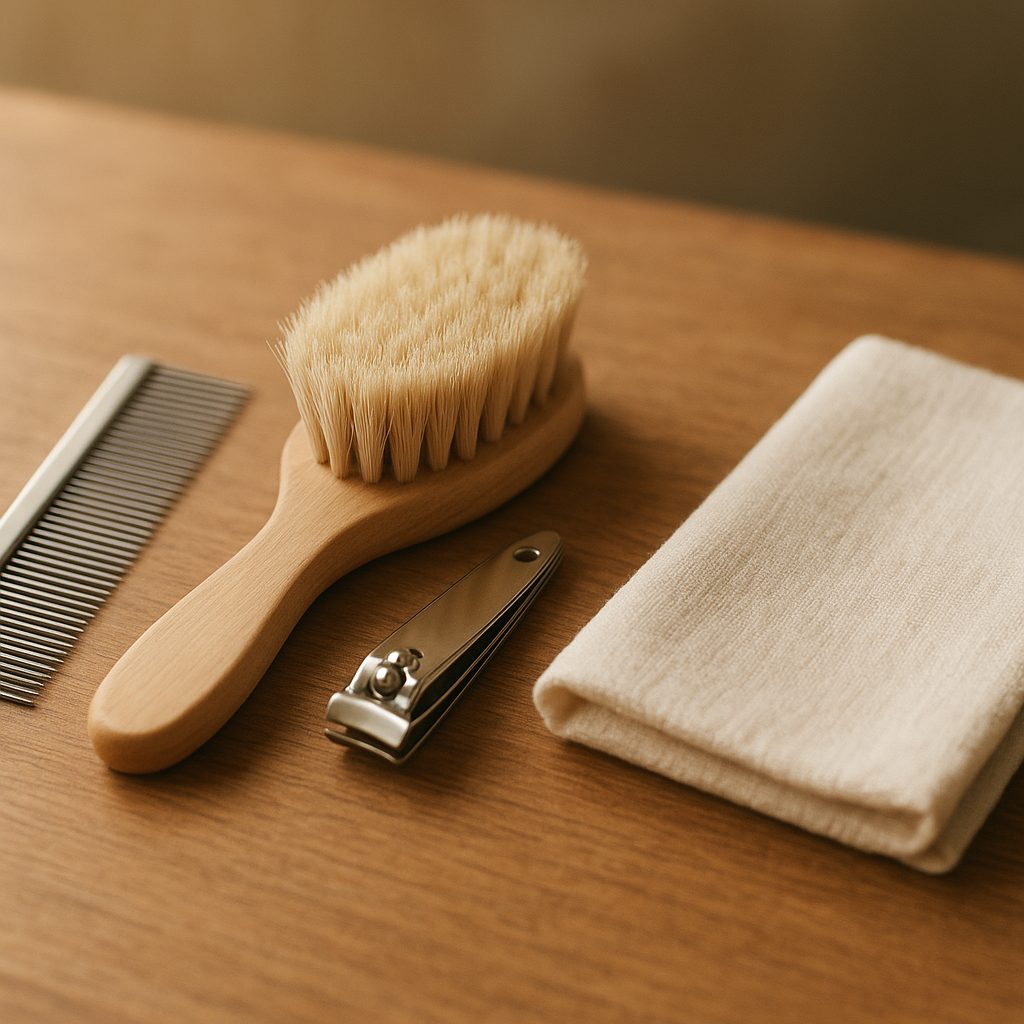
Cat grooming tools are not universal. A brush that feels pleasant on a short, dense coat may do almost nothing for a Persian's undercoat, while an aggressive de-shedding tool can damage a silky coat. Start with the simplest equipment and add only what solves a real problem.
Whatever you buy, introduce it gradually. Let the cat sniff the tool, make one gentle pass and stop before resistance begins.
A metal comb
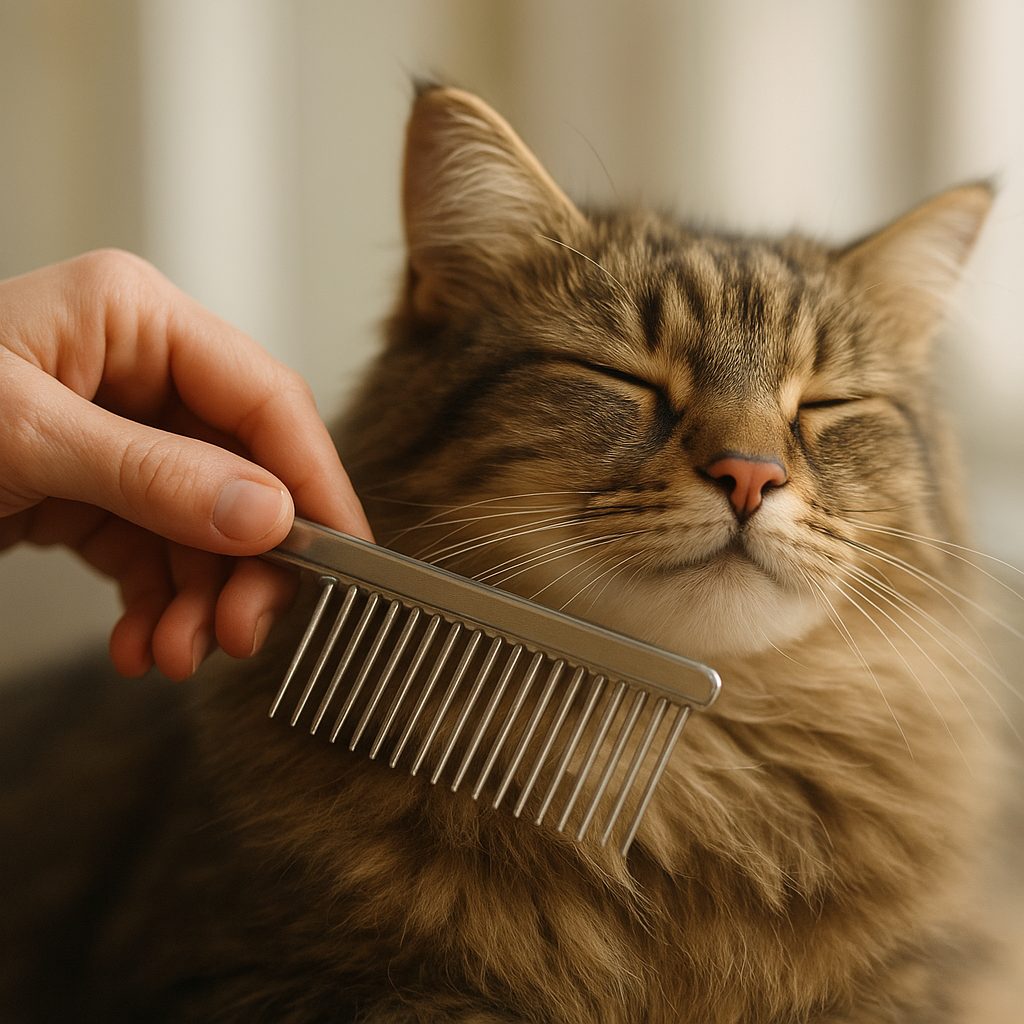
A good metal comb is one of the most useful tools for medium and long coats. Wider teeth help with initial detangling, while closer teeth can check smaller areas after the coat is smooth. Rounded, smooth teeth are less likely to scratch the skin.
Comb in sections and support the hair near the roots. If the comb cannot pass without force, stop and investigate the tangle rather than dragging it through.
Soft brushes and slickers
A soft brush can remove loose surface hair and make grooming enjoyable for many shorthaired cats. A slicker brush may help with some longer coats, but fine wire pins require a light hand. Repeated pressure can irritate the skin.
Choose the smallest tool that lets you work comfortably around the legs, face and belly. Large brushes designed for dogs are often awkward on a cat.
De-shedding tools
De-shedding tools can reduce loose undercoat during seasonal shedding, but they are not suitable for every cat or for daily use. Overuse can thin the coat and abrade skin. Follow the manufacturer's guidance and stop if you see discomfort or irritation.
Hairless, silky-coated and very short-coated cats generally need different care and should not be treated with the same heavy tool as a dense double coat.
Nail clippers
Use small, sharp clippers designed for cats. Dull blades crush rather than cut cleanly. Learn where the quick is and trim only the clear tip unless a veterinarian or groomer has shown you otherwise.
Styptic powder can be useful in case of accidental over-trimming, but prevention is better. One or two nails per calm session is enough when you are learning.
Cloths, wipes and basic cleaning supplies
Soft cloths dampened with warm water help with face and paw cleaning. Choose unscented products specifically labeled as safe for cats when wipes are necessary. Keep a towel, non-slip mat and cat-safe shampoo if your breed requires bathing.
Avoid essential oils, human cosmetics and household disinfectants on the coat. Cats groom themselves and can ingest residues.
Cleaning and storing the kit
Remove loose hair after each session and wash tools according to their materials. Combs and brushes that touch skin should be kept clean, especially if more than one animal uses them. Dry metal tools thoroughly and store sharp items where children and pets cannot reach them.
Inspect pins and teeth regularly. Bent slicker pins, cracked handles and dull nail blades make work less comfortable. Replacing a worn basic tool is often more useful than adding a new specialist gadget.
Matching technique to the tool
Even the correct comb can hurt if used at the wrong angle or with too much pressure. Watch the hair and skin rather than pressing toward a fixed number of strokes. On a long coat, work in layers; on a short coat, a few gentle passes may be enough.
Ask a veterinarian or cat groomer to demonstrate on your own animal. A five-minute lesson can reveal why the cat resists a particular area or why a brush seems ineffective. Technique, patience and coat knowledge matter more than the brand printed on the handle.
A starter kit for different households
For a shorthaired companion, a soft brush, nail clippers and a cloth may cover most needs. A dense or long coat usually justifies adding a quality comb and scheduling more frequent sessions. For a hairless cat, the emphasis shifts toward soft cloths, cat-safe bathing products and warm towels.
Buy for the animal you actually have. Read the breed-specific guidance, but let skin sensitivity and tolerance decide how often a tool is used. A modest kit used correctly keeps the coat healthier than an expensive set that frightens the cat every time it appears.
Tools to treat with caution
Scissors near a tight mat are dangerous because skin can fold into the mat and be cut accidentally. Razor-sharp de-matting devices and restraint equipment also require training. Severe mats, painful skin and extreme resistance are reasons to seek professional help, not to buy a more aggressive tool.
For most households, the essential kit is a suitable comb, a gentle brush, sharp nail clippers, soft cloths and a nonslip surface. Used patiently, those basics cover more grooming needs than a complicated collection ever will.