Breeds · April 16, 2025
Long-Haired Cat Breeds: Coats, Temperaments and Grooming Needs
Long coats vary from silky and lightly matting to dense and daily-care intensive. Choose the maintenance level as carefully as the appearance.
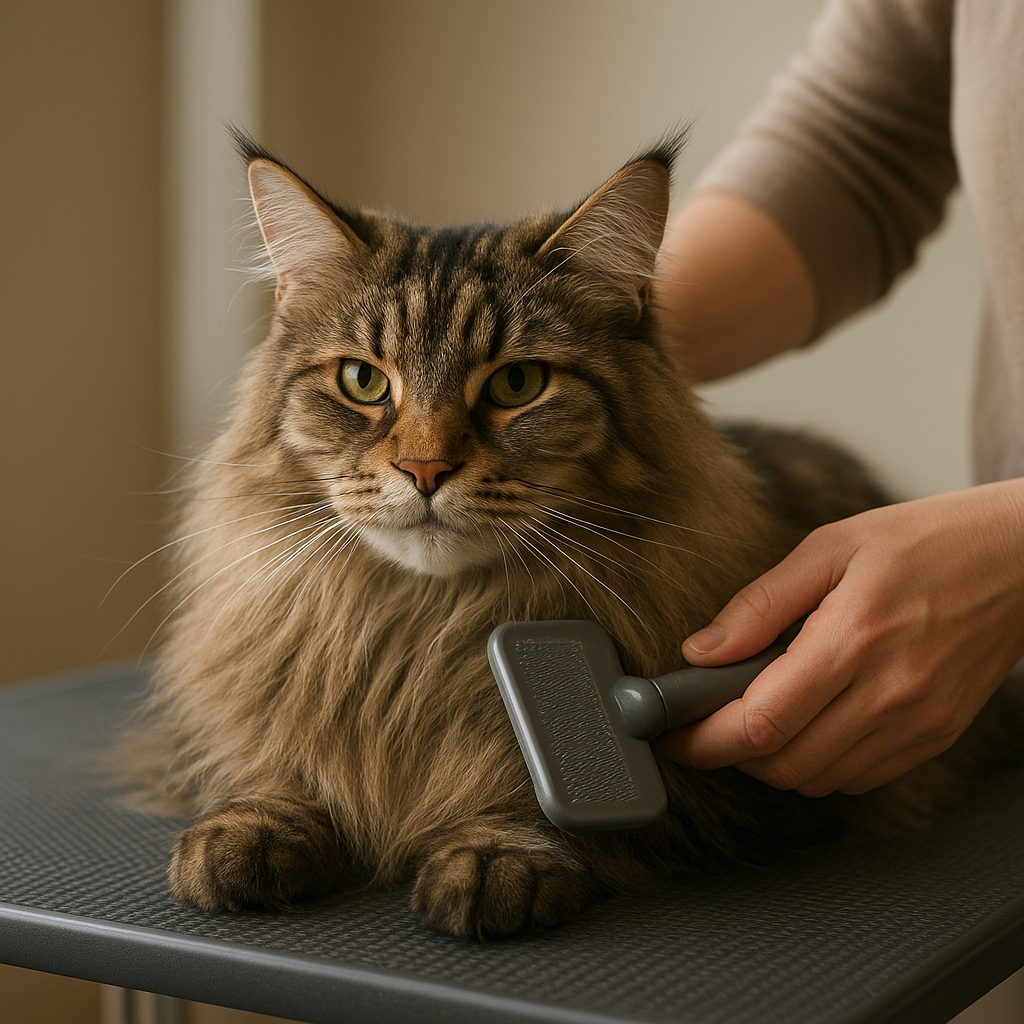
Long-haired cat breeds share a striking appearance, but their coats do not all behave in the same way. Some have a light, silky texture that resists tangling; others have a heavy undercoat that mats quickly. Grooming time, shedding and even the best brush can differ between breeds.
Temperament is equally varied. A quiet Persian and an active Norwegian Forest Cat may both have long hair, yet they fit very different households.
Persian
Persians have a long, full coat and a distinctive head and body type. They are often calm companions, but their grooming needs are substantial. Daily combing helps prevent mats, and the face and eye area usually need regular gentle cleaning.
This is a breed for someone who sees grooming as a routine part of care, not an occasional cosmetic task. Prospective owners should also discuss breed-relevant health screening with a responsible breeder.
Maine Coon
Maine Coons are large, sturdy cats with a shaggy, uneven coat rather than a uniformly fluffy one. Many are sociable and playful without needing constant attention. Their tail, britches and chest may require particular attention during shedding.
They need space to climb and play, plus appropriately large equipment. A standard scratching post or carrier designed for a small cat may not be comfortable for a fully grown Maine Coon.
Ragdoll
Ragdolls are often affectionate and interested in family life. Their coat is frequently described as softer and less prone to matting than a Persian's, but regular combing remains important. Check behind the ears, under the legs and around the hindquarters.
They are a better match for owners who want interaction than for people seeking a completely independent cat. Gentle handling and predictable routines help them thrive.
Norwegian Forest Cat
The Norwegian Forest Cat has a weather-resistant double coat developed for a harsh climate. It changes noticeably with the seasons and can shed heavily. These cats are often athletic climbers with a strong, substantial build.
Weekly grooming may be enough at some times of year, with more frequent work during coat change. Tall climbing furniture and active play are as important as coat care.
Birman
Birmans have a silky coat, darker points and characteristic white paws. They are often people-oriented and can fit households looking for an affectionate but not overwhelmingly intense cat. Their coat texture may be easier to manage than a very dense double coat, though tangles still need attention.
Use a gentle comb and check the body systematically rather than brushing only the attractive top layer.
Coat changes through life
A kitten's coat may be much shorter and easier to manage than the adult coat. Texture and density can also change with age, neutering, climate and season. Do not choose a breed from an eight-week-old kitten's appearance alone; ask to see adult relatives and learn what their routine involves.
Shedding is normal, but sudden bald patches, dandruff, greasy clumps or a coat that changes abruptly deserve attention. Nutrition, parasites, illness and stress can all affect condition, so a new brush is not always the right first response.
A manageable grooming setup
Keep a nonslip mat, suitable comb and soft cloth where you normally spend time with the cat. Short sessions are easier to remember when they follow an existing routine. Start with areas the cat enjoys and gradually include the belly and hindquarters.
Professional grooming can be part of responsible ownership, especially if a coat becomes difficult to manage. Choose someone experienced with cats and ask how they handle stress. The objective is not a perfect silhouette every day; it is a coat that does not pull, trap debris or hide skin problems.
Choosing equipment for a bigger coat and body
Longhaired cats can need larger litter trays and carriers, especially substantial breeds such as the Maine Coon. Check that the cat can turn comfortably and that litter does not become trapped easily around the hindquarters. Stable furniture matters more than decorative size.
Keep a small grooming kit accessible and inspect high-friction areas after play. Regular observation prevents most surprises. If the coat begins to change despite a consistent routine, ask a professional to check technique and health rather than automatically increasing the frequency of bathing.
Grooming before you choose
Ask a breeder or rescue carer to demonstrate the current routine. Find out which tools are used, how often the cat mats and whether professional grooming is ever needed. A coat that looks effortless at a show may represent hours of skilled preparation.
Long-haired cats also need litter-area hygiene and occasional checks for debris in the coat. If your cat suddenly resists brushing, look for skin discomfort or mats rather than treating it as disobedience.
The right long-haired breed is one whose grooming you can sustain kindly every week. Beauty is easiest to enjoy when the cat is comfortable beneath the coat.