Show ring · April 23, 2024
What Is a Cat Show? A Visitor's Guide to the Show Hall
A cat show is part competition, part breed exhibition and part community gathering. Here is what actually happens beyond the rows of cages.
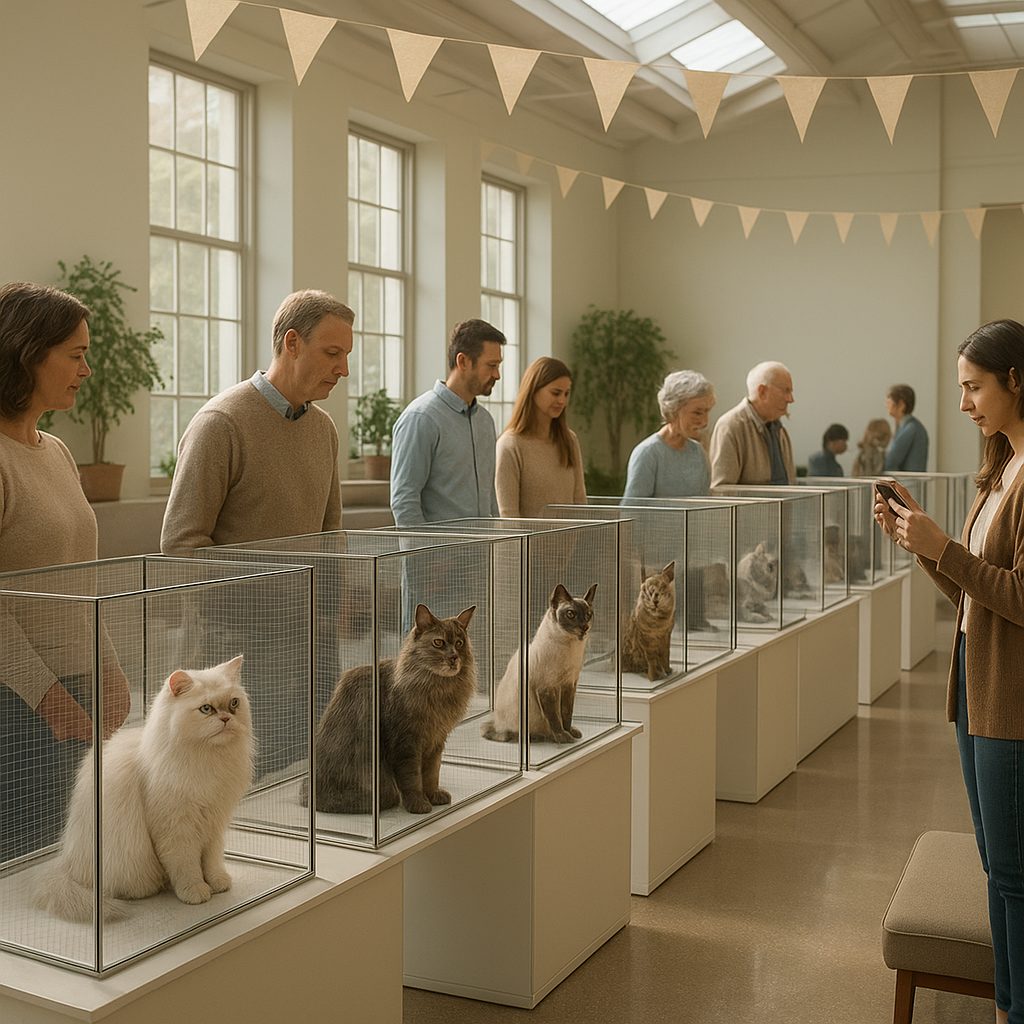
If you have never attended one, a cat show can look mysterious: rows of enclosures, numbered cats, judges examining animals on tables and people comparing notes about breeds. At its core, a cat show is an organized event where cats are evaluated against a written breed standard rather than against one another's personal charm.
Shows are run by cat associations and local clubs. They usually welcome pedigree cats, and many also include classes for household pets. A household pet does not need a pedigree to enjoy the experience; temperament, condition and overall health matter in that class.
The basic idea behind judging
Each recognized breed has a standard describing its ideal head shape, body, coat, tail, eyes and other features. A judge compares the cat in front of them with that standard. The judge is not deciding which cat they would most like to take home, and a larger or more vocal cat does not earn extra points.
During a typical class, cats are called to a judging ring by number. The judge takes each cat out of its enclosure, handles it gently, looks at structure and coat, and places it back. Owners normally do not handle their own cat while it is on the table. This keeps the process consistent and lets the judge assess the animal.
What the different classes mean
Show terminology varies by association, but you will often see classes for kittens, championship adults, premiership cats that have been altered, and household pets. Kittens are not expected to look like fully developed adults. Within each class, breed wins can lead to further awards, such as best of breed or a place in a final.
- Kittens: young cats within the age range set by the association.
- Championship: intact adult pedigree cats competing toward titles.
- Premiership: altered pedigree cats, judged with equal seriousness.
- Household pets: cats without a show pedigree, valued for condition, health and personality.
Ribbons, finals and points
Ribbons can mark class placements, breed awards, finals or special achievements. Their exact colors and meanings depend on the organizing association, so the show catalog is more useful than guessing. A final is a smaller round in which a judge presents selected cats with additional awards. Points earned under different judges may count toward titles.
One show often includes several judges working at the same time. A cat may receive different results in different rings. That is normal: each judge applies the same standard independently, and the field of competing cats can differ from one weekend to another.
What a visitor can do
Start with the show catalog or the schedule near the entrance. Walk through the benching area quietly, where cats rest between appearances. Some exhibitors are happy to talk about their breed, but ask first and choose a moment when they are not preparing for a ring.
Do not open a cage, touch a cat without permission, use flash photography or bring food close to the enclosures. Cats at a show are in an unfamiliar environment, and good visitor behavior makes the day easier for them. If you want to understand a particular breed, ask what makes it different to live with, not only what makes it successful in the ring.
Understanding the show catalog
The catalog is more than a list of names. It usually connects each entry number with a breed, color, class and owner information that the association permits to publish. Some catalogs also include a ring schedule and explanations of awards. Circle the classes you want to watch and note the ring rather than trying to memorize every number.
Exhibitors sometimes attach ribbons and breed information to their enclosures. These displays are useful for visitors, but they are not the official running order. The clerk's announcements remain the best guide to what is happening now.
Common questions from first-time visitors
People often wonder why cats seem sleepy during judging. Most are simply resting between brief appearances, and the benching enclosure is their safe space for the day. Others ask whether every cat is a breeding animal. Many exhibits are pets, including altered pedigree cats and household-pet entries.
If you attend with children, explain the quiet rules before entering. A show can be an excellent lesson in observing animals without grabbing or startling them. Bring patience as well as curiosity: the most interesting conversation may happen when an exhibitor has finally sat down for lunch.
Is a cat show worth visiting?
Yes, especially if you are choosing a breed or simply enjoy observing cats. You can see several examples of the same breed, notice variations in coat and body type, and speak with people who live with them every day. The event is also a reminder that successful showing starts with patient handling, careful grooming and a cat whose welfare comes before any ribbon.
For a first visit, allow an hour or two, watch at least one full judging class and leave time for questions. The show hall becomes much easier to understand once you have seen the rhythm of cage, table, evaluation and ribbon for yourself.